PRODUCT

Autonomous Penetration Testing

Continuous penetration testing that proves what's exploitable, with evidence.

How does continuous penetration testing work?

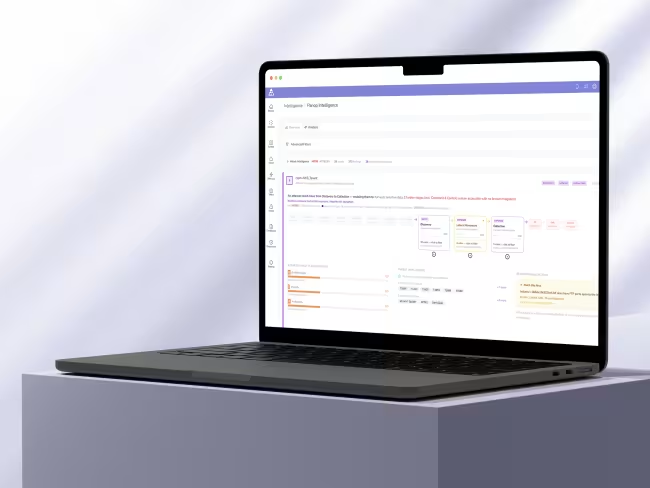
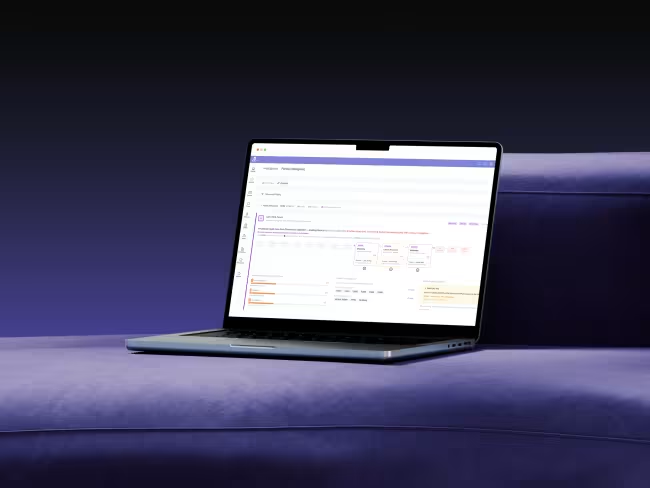
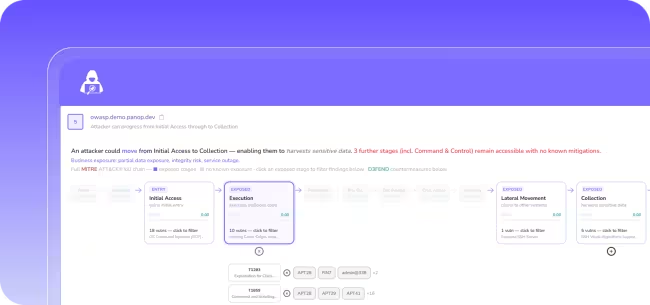
Panop runs offensive validation continuously instead of on an annual or quarterly schedule. Real-world attacker techniques are executed safely against live infrastructure to confirm which findings are genuinely exploitable, and each result is recorded with its evidence and full attack path. Testing re-runs whenever the environment changes and after every fix, so exploitability is proven rather than inferred from scanner output.

A pentest report tells you what was exploitable the week it ran. Your attack surface changes the day after it lands. Panop tests continuously and exploits safely, so when it says a finding is exploitable, that's not a severity score. It's a demonstrated fact, with the evidence attached.

A pentest that never goes home

Annual testing leaves your surface unverified for the other 51 weeks. Panop tests continuously: every new asset, every configuration change, every deployment gets probed the way an attacker would probe it, the day it appears, not next year

path

Exploited safely, so "exploitable" means something

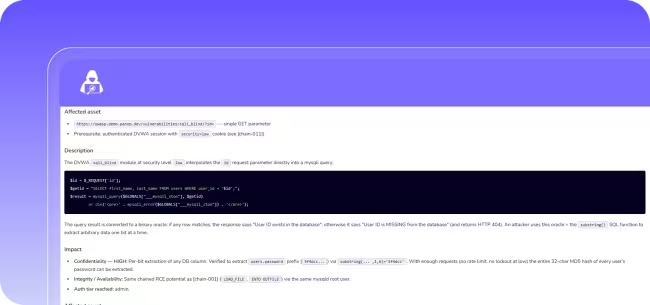
Panop doesn't stop at "this looks vulnerable." It exploits findings under strict guardrails, proving access without touching data or leaving anything behind. The result: zero argument-with-the-scanner meetings, because every critical comes with proof.

evidence

Three mediums can be one critical

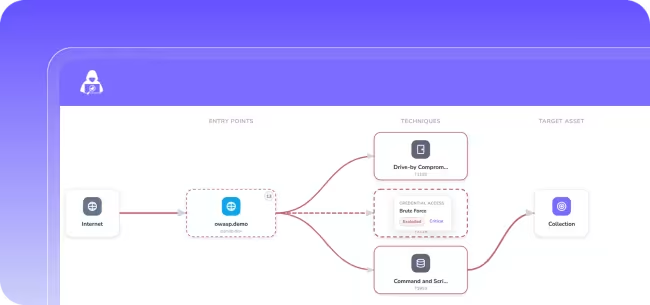
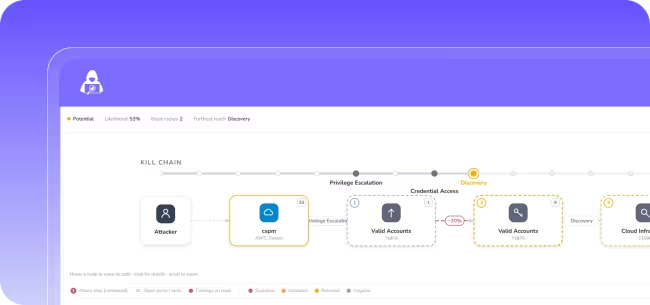
Attackers don't exploit findings, they chain them. Panop pentests the way they do: an exposed API, a leaked supplier credential, and a reachable datacenter are three shrugs in a scanner report and one demonstrated breach in Panop.

cve

Evidence your auditors accept

NIS2 and DORA expect regular, documented security testing, not a PDF from last spring. Every Panop finding ships with a sanitised proof of concept, a full timeline, and its mapping to the testing requirements your auditors check.

attack

Where severity scores become demonstrated facts.

Validation is the stage that decides whether a finding is real. Panop takes what discovery and posture assessment surfaced, executes attacker techniques against it under strict guardrails, and chains findings the way an adversary would. What comes out is not a ranked list of maybes but a set of exposures with a proven path and the evidence to show it.

Exposed services
Cloud and internal
Supplier credentials
Proven exploitable
Attack paths with evidence
Re-tested after fixes
Exploit validation Attack path chaining Evidence capture

Built to prove exploitability, not estimate it

Three testing behaviours that separate a demonstrated breach from a scanner severity rating.

  • Every new asset, configuration change and deployment gets probed the day it appears, instead of leaving the surface unverified between annual engagements.

exposure intelligence
attack surface mapping
integrations

Explore solutions by use case

Frequently asked questions

The questions security teams ask most about running penetration testing continuously.

Does this replace a manual penetration test?

It replaces the coverage gap between them. A manual engagement gives you depth and human creativity on a defined scope for the week it runs, then leaves the surface unverified until the next one. Panop keeps offensive validation running against the whole estate in between, so a manual test starts from a surface that is already mapped and already proven exploitable in the obvious places.

Is it safe to run against production?

Exploitation runs under strict guardrails designed to prove access without acting on it. Panop confirms that a path works, captures the evidence and stops there, without reading or altering data and without leaving artefacts behind. That boundary is what allows validation to run continuously against live infrastructure rather than only in a staging copy.

Why does chaining findings matter?

Attackers rarely rely on one flaw. An exposed API, a leaked supplier credential and a reachable internal service can each read as medium severity in isolation while combining into full access. Panop tests the combinations as well as the individual findings, which is how three items a scanner would shrug at become one demonstrated breach with a documented path.

What happens after a fix ships?

The same test re-runs automatically to confirm the path is actually closed rather than trusting the ticket. Because validation is continuous, a fix that only partly mitigates the issue, or a regression that reopens it later, shows up as a finding again instead of staying closed on paper.